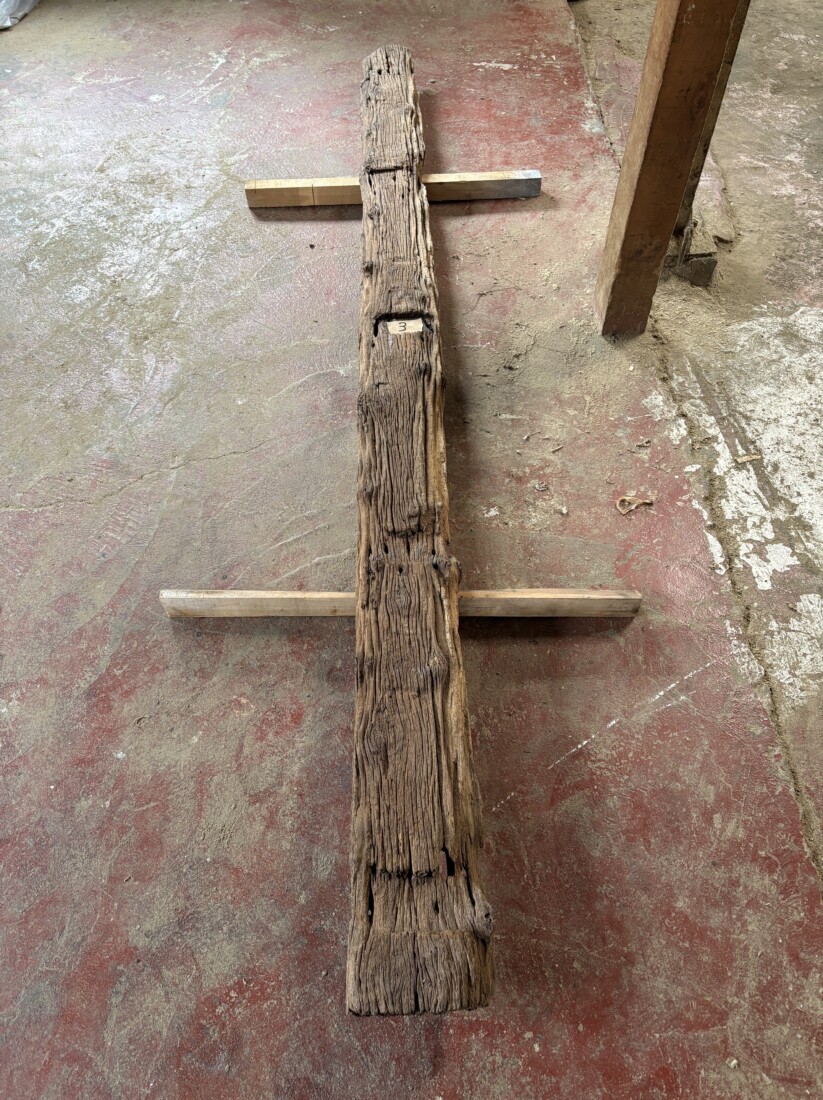
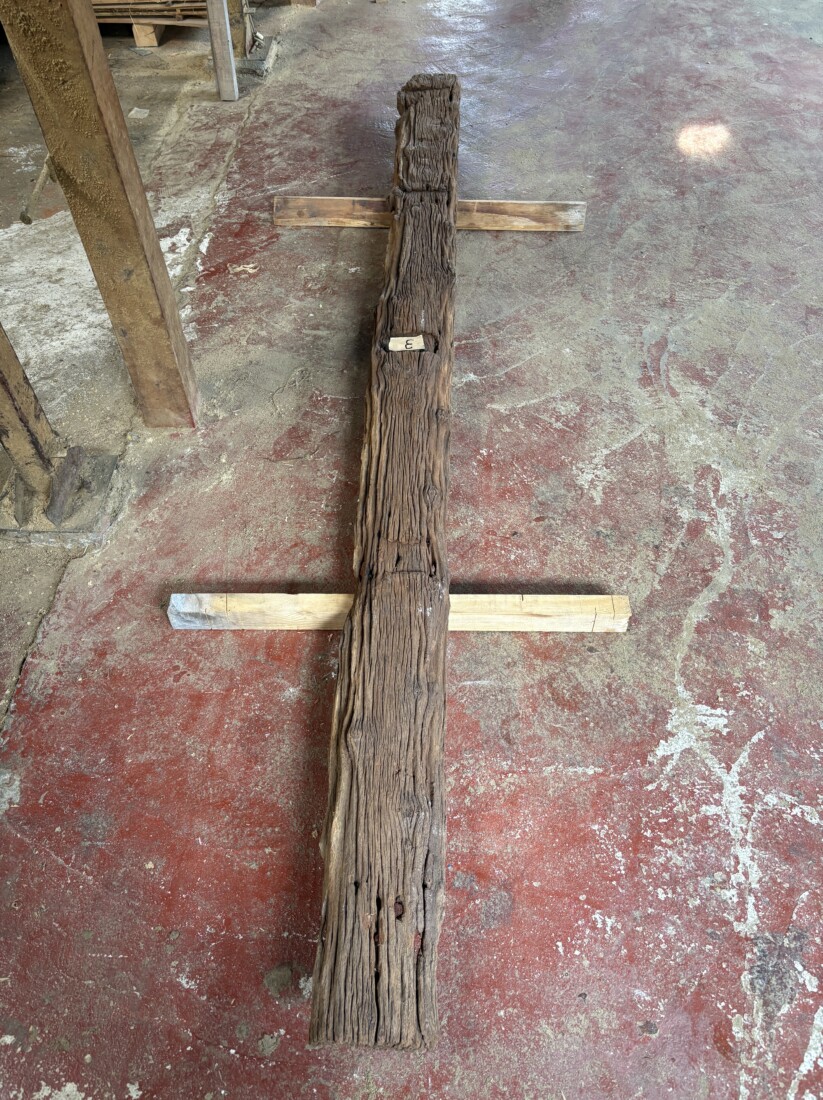
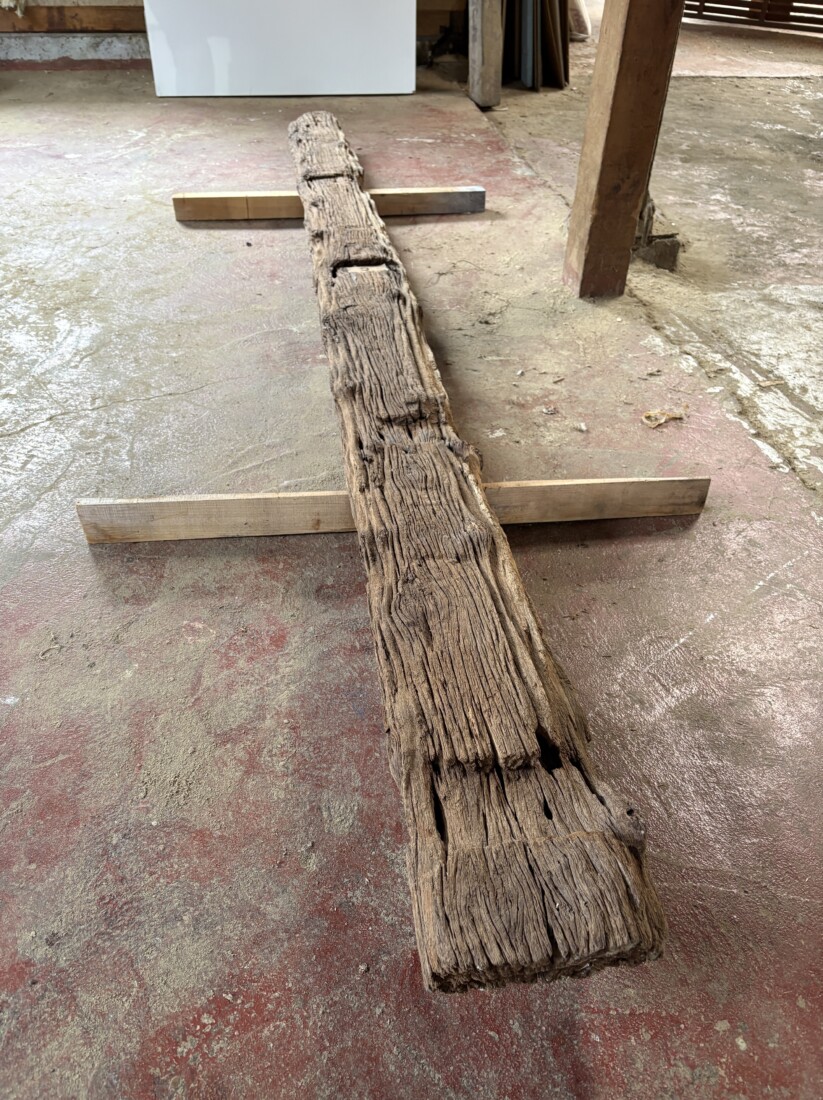
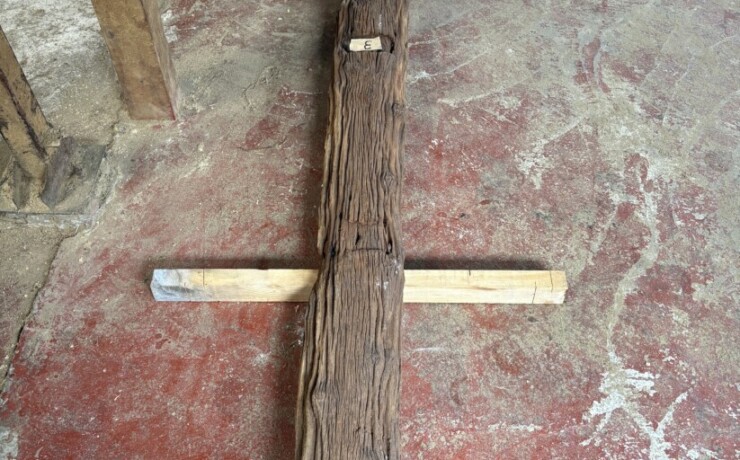
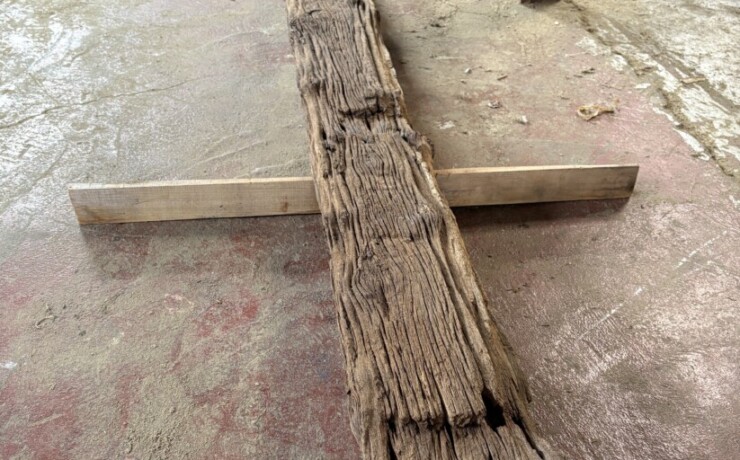
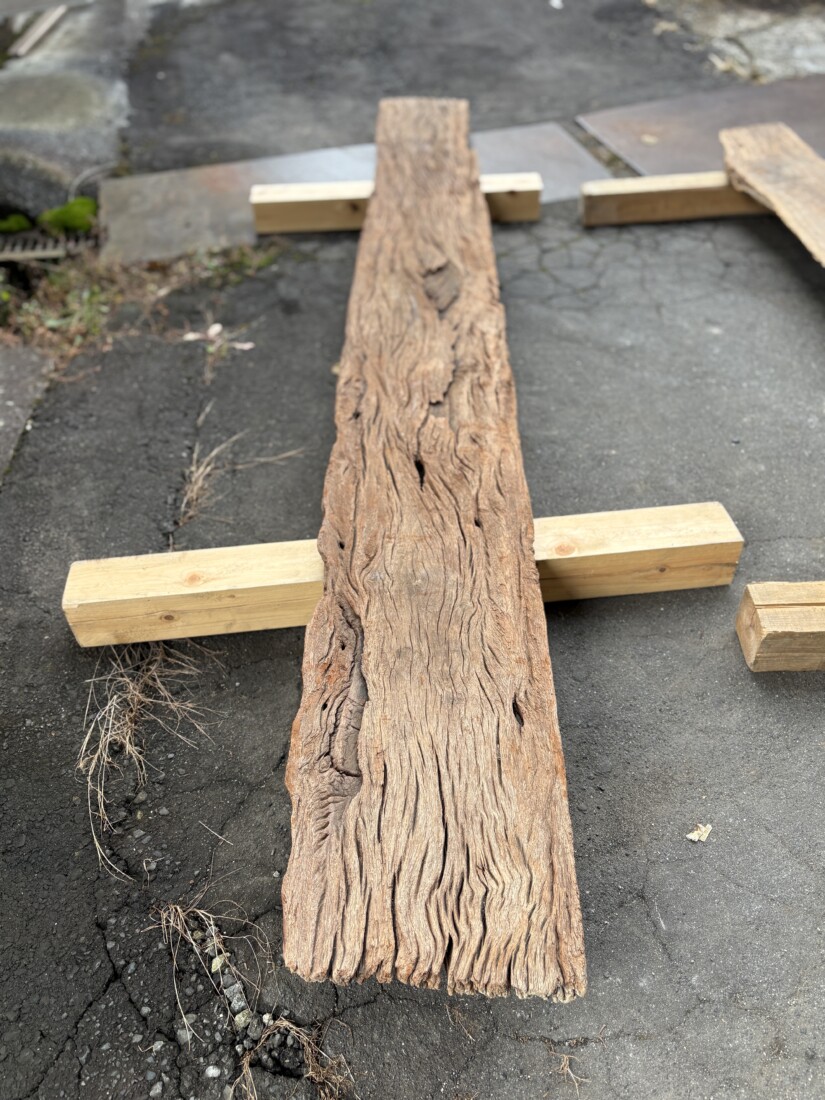
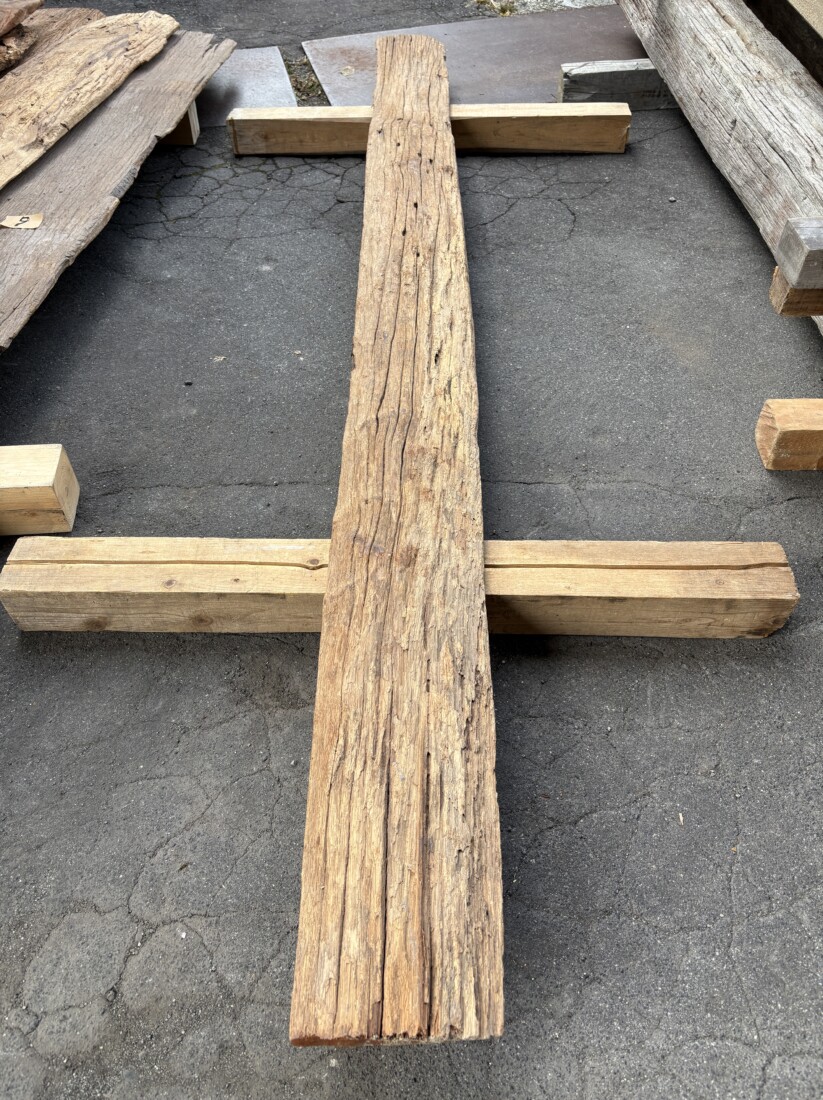
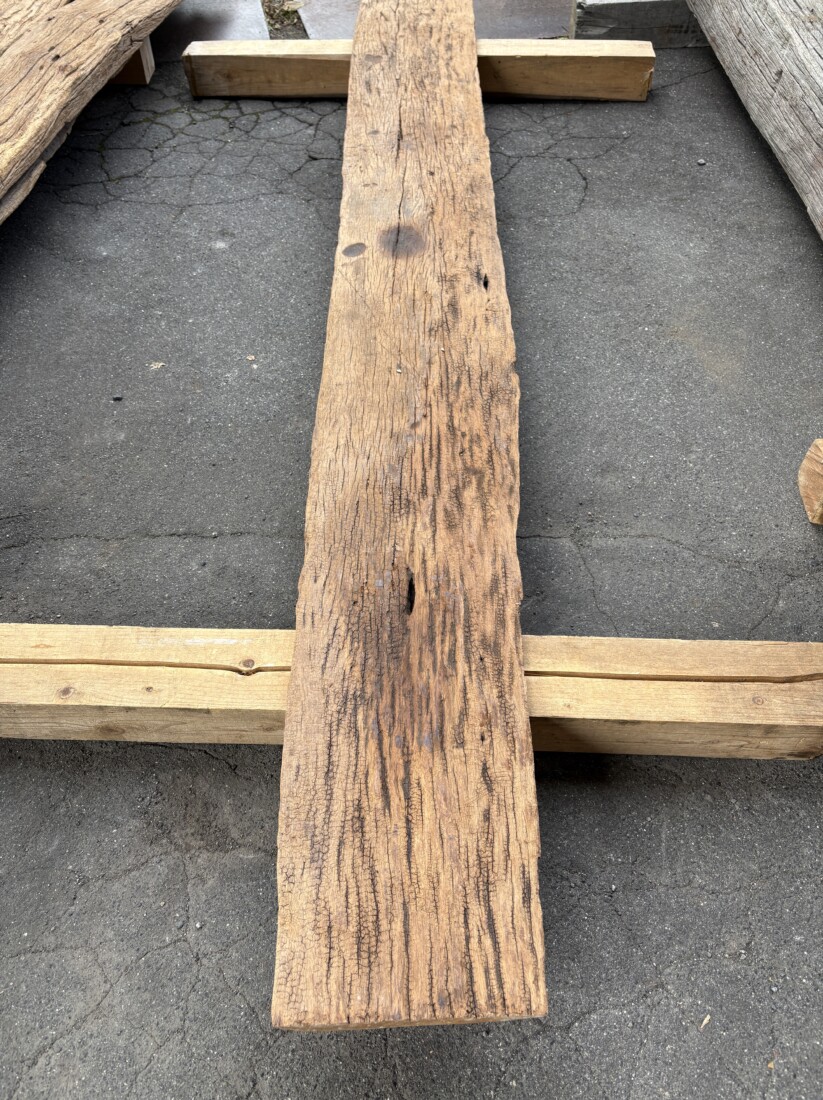
Vintage Teak ヴィンテージ チーク材 しわ板 #3 長さ2970
チーク古材は伝統の技法で建築されて50~100年以上経過した古民家から取り出したもの、
あるいは樹齢100年以上経過したものです。
このため古材には傷や割れ、ノミの跡などがあり、新しい木材では決して出せない一点一点の表情や風情があります。例えばタイ産のチーク材は、腐ることなく、雨風にさらされた味のある自然の状態が保たれ味わい深く、飲食店などで大人気となっています。
手をかけると生まれ変わる。
磨いたり加工したりすれば、美しく芸術的な家具や装飾品に生まれ変わります。例えばチークのベッドは、サンディング(研磨)かけると、チーク油が浮いた本当のチーク色の、非常に趣のあるベッドへと変わります。
新材よりも強度が強く、長い時間をかけて自然乾燥され、強度を増していくのが古材です。特に、タイ北部~ミャンマーでは土壌が石灰質なのでとても硬くなりやすく、より耐久性が増します。
こうした特徴から、私たちは古材を単なる資材や、ましてや廃材でもなく、非常に価値のある「木財」だととらえています。
ぜひ一度、この古材の魅力を体感してみてください。
Antique teak wood is recovered from traditional houses built using traditional techniques that are over 50 to 100 years old,
or from trees that are over 100 years old.
As a result, antique wood has scratches, cracks, and chisel marks, giving each piece a unique look and feel that new wood just can’t match. For example, Thai teak, which doesn’t rot and retains its natural, weather-beaten appearance, is extremely popular in restaurants and other establishments.
With care, it can be reborn.
With polishing and processing, it can be transformed into beautiful, artistic furniture and decorative items. For example, sanding a teak bed transforms it into a truly tasteful bed with the teak oil floating on top.
Antique wood is stronger than new wood, and it is naturally dried over a long period of time, which increases its strength. In particular, in northern Thailand and Myanmar, the soil is calcareous, making it very hard and more durable.
Because of these characteristics, we see old wood not as mere materials, or even as waste, but as extremely valuable “wooden goods.”
We encourage you to come and experience the charm of this wood for yourself.